What is Monroya?
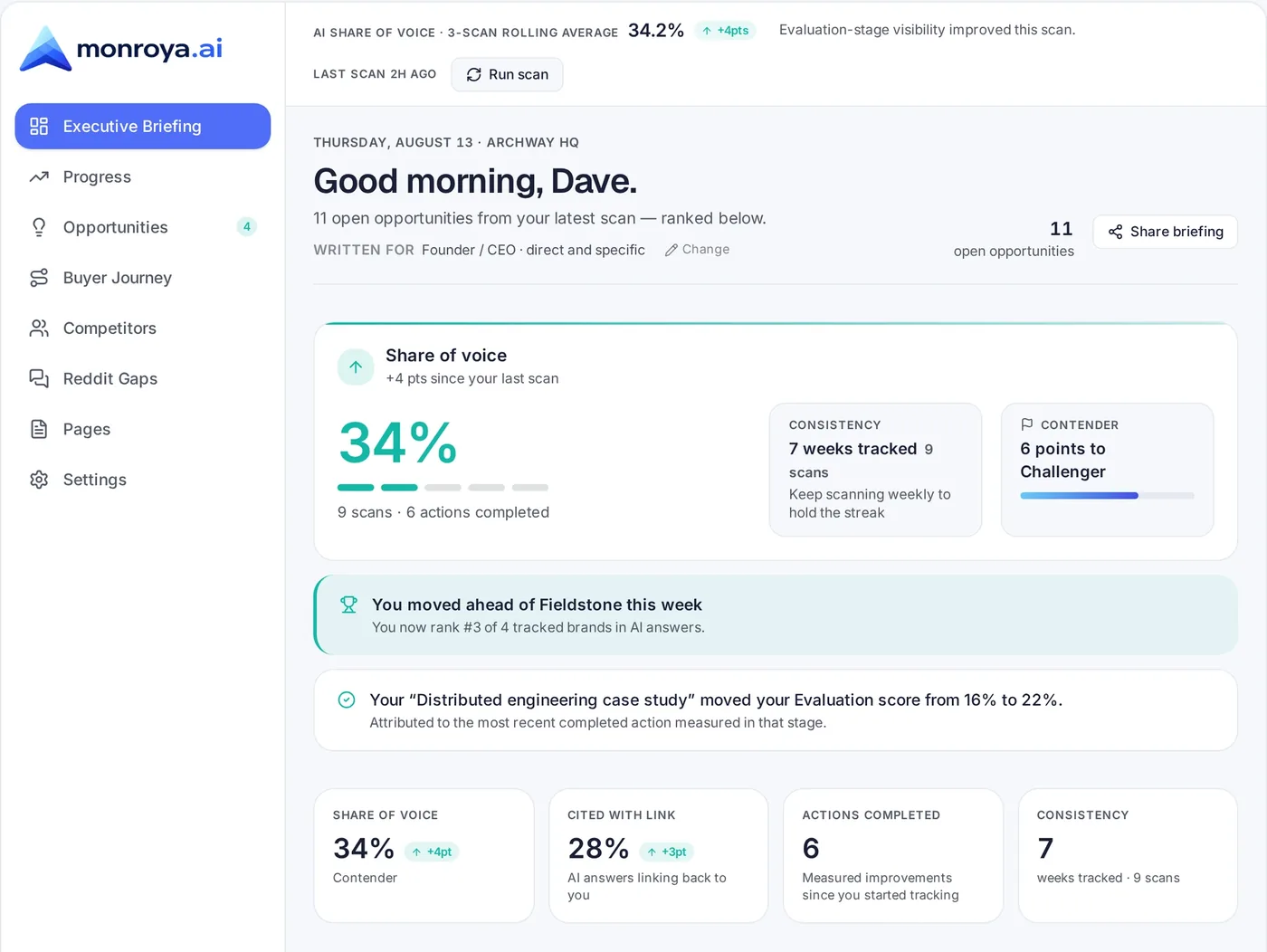
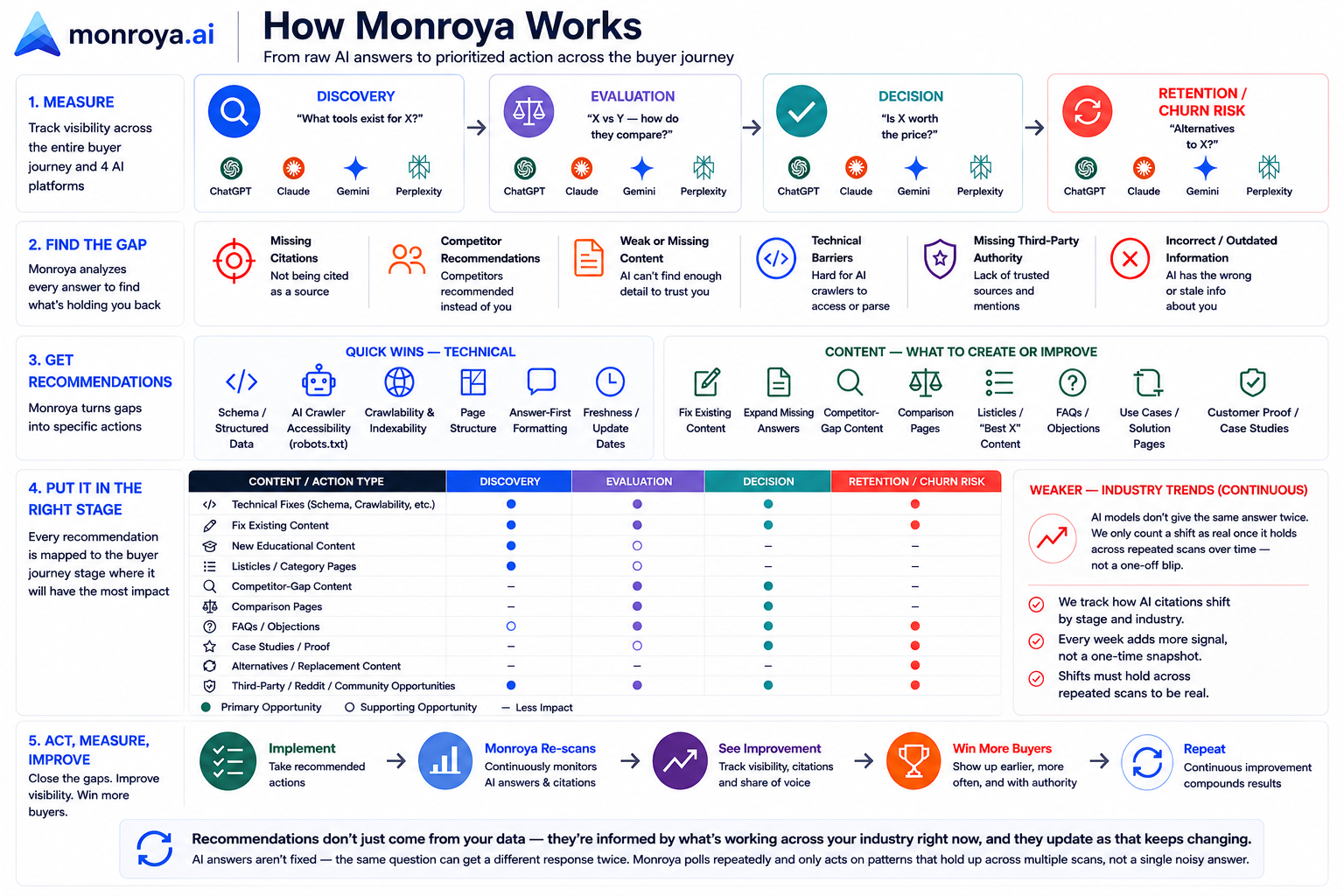
Monroya is an AI visibility platform. It runs your buyer questions through ChatGPT, Claude, Gemini and Perplexity on a schedule, records whether your company is named, cited or missing, and turns each gap into a specific fix with a draft you can ship.
Which AI assistants does Monroya track?
Four: ChatGPT, Claude, Gemini and Perplexity. Every tracked prompt runs against all four, with multi-run aggregation so a single lucky or unlucky answer never moves your score.
How much does Monroya cost?
Three plans: Starter at $79 per month, Growth at $199 per month, and Intelligence at $299 per month. Every plan starts with a 7-day free trial and no credit card is required to begin.
How is this different from SEO rank tracking?
Rank tracking measures position in a list of blue links. Monroya measures whether an AI assistant names you inside a written answer, which source it cited to do it, and at which stage of the buyer journey. Those are different mechanics with different fixes.
How long until I see my first results?
Your first scan runs during onboarding and returns a real finding before you create an account. A full scan across your whole prompt set completes within minutes of signup.
Where does Monroya's data come from?
Live answers from the four assistants, the sources those answers cite, and a page-level readability scan of your site covering schema, FAQ structure, answer-first layout, freshness, crawlability and author signals. Nothing is modeled or estimated from third-party rank data.
What kinds of sources get cited in AI answers?
Documentation and product pages, independent review and comparison sites, news and trade publications, community discussion including Reddit and forums, and research or benchmark content. Monroya reports the mix so you can see which source type is carrying your competitors.
Can agencies use Monroya for client reporting?
Yes. Agencies run separate tracked brands with their own prompt sets and competitors, and export briefings that show movement, cause and the actions taken between scans.
What happens if we stop tracking AI visibility?
You keep whatever history you already collected, but the gap itself is unrecoverable. AI assistants retrieve and re-rank sources continuously rather than on a periodic recrawl schedule, so the answer a buyer sees for your category can change within days, and no one publishes an archive of what an assistant said last month. In our own citation data, the source mix behind ChatGPT answers shifted materially inside a single week. Stop for 90 days and you can restart scanning, but you cannot reconstruct which competitor took the citation, from which source type, or on which date it moved, so the attribution behind that quarter is gone for good.