Help ChatGPT Recommend Your Real Estate Business Locally
By Jeremy Unruh, Founder, Monroya · Published October 22, 2026
Want this for your company? See how AI assistants answer about your site.
Run the free check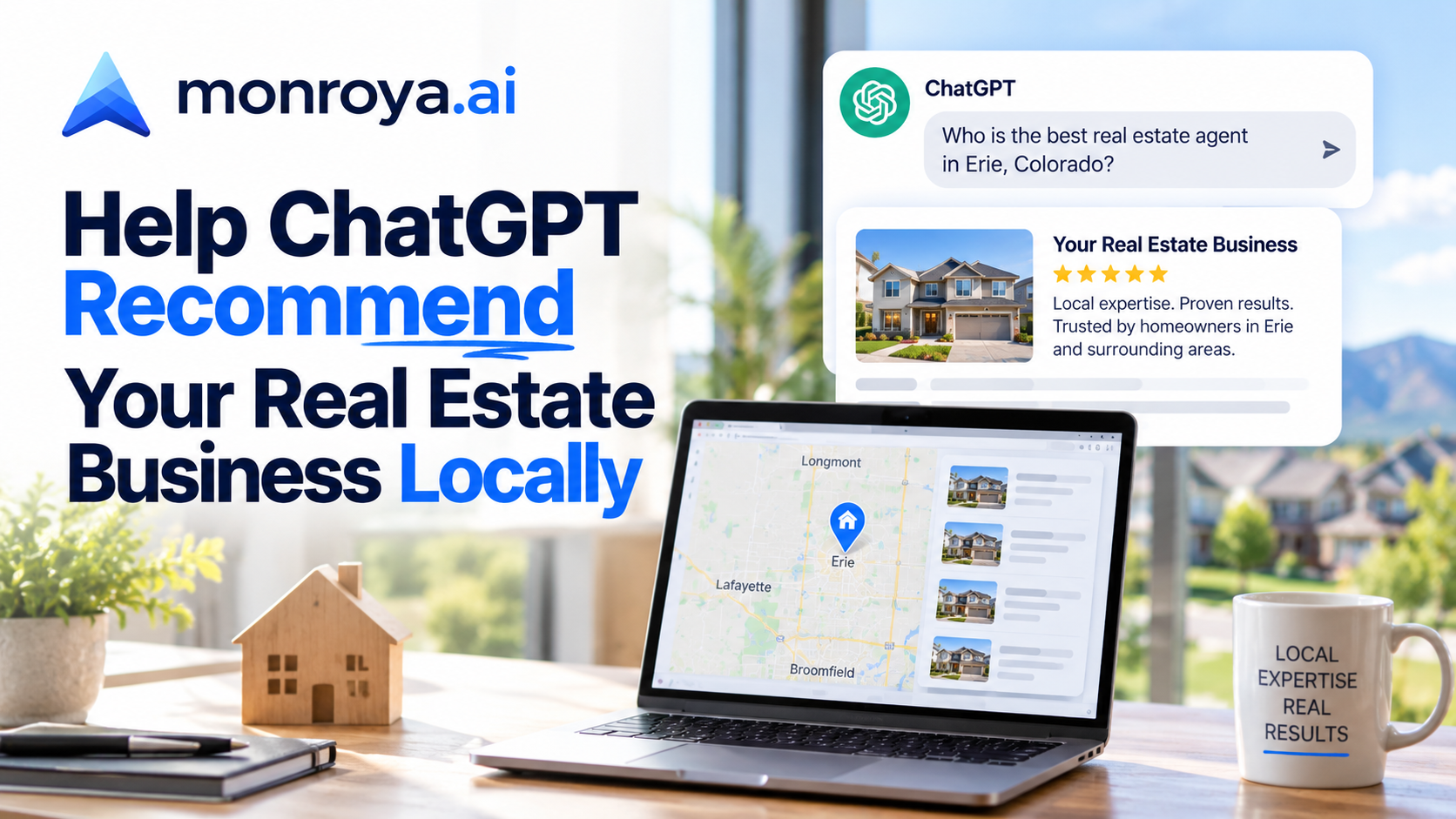
Give ChatGPT a clear, factual page to work with after a buyer or seller shares their location and needs. Instead of chasing a nationwide “best realtors” mention, explain who your real estate business serves, where you work, and how you handle that client's transaction. You can't guarantee a recommendation, but you can make your business easier to evaluate for a specific local request.
What happened when ChatGPT was asked for the best realtors?
ChatGPT asked for a location rather than naming businesses. In the October 22, 2026 check, the question was simply “best realtors,” and its response began: “What city and state, or ZIP code, are you looking to buy or sell in?”
It explained that realtor quality is highly local and offered to suggest specific businesses after receiving that detail. That makes the follow-up conversation a useful place to focus your work.
Claude also asked for more information: location, property type, and whether the person was buying or selling. Those were qualifying questions, not business recommendations.
Gemini and Perplexity took a different approach. Gemini named businesses including Keller Williams Realty, Sotheby’s International Realty, Compass, RE/MAX, and Century 21; Perplexity named businesses including Compass, RE/MAX, Keller Williams Realty, eXp Realty, and Coldwell Banker.
Perplexity also said the best choice depended heavily on city and property type. These answers don't establish which local agent would get recommended next, but they show why a broad national question is an incomplete test for your business.
Which part of the conversation should your website answer?
Your website should answer the request that comes after the prospect explains their situation. Think of it as the online version of your first buyer consultation or listing appointment.
“Best realtors” tells you very little. “I'm selling a condo in [your city], and I need to understand what to prepare before listing” gives you a service area, a transaction side, a property type, and a practical concern.
That's a proposed follow-up to test, not an answer observed in the October check. Keeping that distinction matters: you don't yet know which businesses ChatGPT would name for it.
Choose a situation that reflects work you actually do. If your team regularly handles condo listings, explain that process; if your practice centers on first-time buyers, build around financing preparation, showings, offers, and contract deadlines instead.
For the broader basics, see AI visibility for realtors. Here, the job is narrower: create the page that helps someone assess your fit once they've answered the assistant's qualifying questions.
What should a transaction-specific page contain?
A useful page should connect your local service to the client's next decisions. It shouldn't be a generic city page with “best realtor” repeated throughout.
Start with a direct introduction naming your business, service area, and actual service. A fill-in structure could be: “[Business name] represents condo sellers in [your city]. We help you prepare for listing, review comparable sales, coordinate marketing, and evaluate offers.”
Only keep statements that describe your work. If another person or company handles part of the process, explain that relationship instead of implying it's all done in-house.
Next, answer the questions you hear during consultations. For a condo seller, that might mean how you choose comparable units, what association documents to gather, how showing access works, and what you discuss before setting an asking price.
Make your process concrete. Explain how you account for differences between units, such as condition, floor level, parking, or outdoor space, rather than relying on “unmatched local expertise.”
Include the responsible agent or team, brokerage affiliation, and a clear contact route. A visitor shouldn't have to guess whether the page describes an individual agent, a team, or the brokerage as a whole.
How do you show experience without claiming you're the best?
Show the work behind your advice instead of awarding yourself a title. Buyers and sellers need reasons to trust your judgment, and unsupported superlatives don't give them much to assess.
If you have permission to discuss a past listing, explain the assignment and your role accurately. You might describe the preparation decisions, marketing work, or offer-review process, without publishing private client details or inventing a success story.
Use transaction figures or sale outcomes only when you can document them and publish them appropriately. Don't turn a brokerage-wide result into a personal production claim, or imply that a past sale guarantees a future result.
You can also demonstrate expertise without disclosing transaction results. Explain what you review before recommending a list price, what sellers should bring to a consultation, and when a question needs an attorney, lender, inspector, or tax professional.
Keep neighborhood descriptions factual and property-focused. Avoid steering language or suggestions about who belongs in a neighborhood, and review content for applicable fair housing, advertising, brokerage, and MLS requirements.
How can you improve an existing page instead of publishing more?
Revise the closest relevant service page first. If you already have a page about selling condos in your market, making it more useful is a better starting point than creating another page with nearly the same purpose.
Read it as a seller who has just told ChatGPT their location and property type. Can that person tell what you do, what happens next, and why your process fits their transaction?
Use this publishing checklist:
- Name the business, brokerage relationship, and actual service area clearly.
- Address one recognizable client situation, such as listing a condo or buying a first home.
- Explain the work you perform before, during, and after an offer is accepted.
- Support experience claims with accurate, publishable details.
- Remove outdated information and add a clear consultation contact route.
Link the page from relevant areas of your own website, such as your seller services page or agent bio. Don't leave it disconnected from the pages visitors normally use.
Avoid copying the same text across nearby cities with only the place name changed. Where your service genuinely differs, explain the difference; where it doesn't, a clear service-area description may do the job.
How should you test the next turn in the conversation?
Test the local follow-up directly, and separately test it as part of a conversation. These checks answer slightly different questions: what happens with a detailed request from the start, and what happens after an assistant asks for clarification.
For a conversational check, begin with “best realtors.” If the assistant asks where you're buying or selling, reply with your actual service area and the client situation your page addresses.
For the direct check, put those details into the opening request. Keep the wording consistent when you repeat it so you're not comparing a condo seller's request with a luxury buyer's request and treating the difference as progress.
Record the date, platform, exact wording, and businesses named. Note separately whether your business was recommended, your page was cited, or the assistant asked another question.
A citation isn't necessarily a recommendation, and a recommendation doesn't establish that your new page caused it. These checks won't prove you're gaining or losing clients either, so also ask incoming prospects how they found you.
FAQ
Does ChatGPT need my city before recommending a realtor?
In the October 22, 2026 check, it asked for a city and state or ZIP code before offering specific recommendations. That describes this response, not a rule that every future conversation will follow.
Should I call my page “Best Realtor in [your city]”?
Use a title that accurately describes your service instead. “Selling a Condo in [your city]” gives you room to answer a real client's questions without making an unsupported claim that you're the best.
Can an independent real estate business use this approach?
Yes. You can explain your service area, transaction process, and relevant experience without a national brand name, although doing so doesn't guarantee that an AI assistant will recommend you.
Can monroya.ai help me choose what to work on?
Yes. monroya.ai checks ChatGPT, Gemini, Claude, Perplexity and Google AI answers, shows which businesses get named instead of you, finds the questions nobody owns yet, and writes the page draft for you. Review that draft for local accuracy, brokerage requirements, and claims you can support before publishing.
Start with the conversation your next client could actually have. Check if AI recommends your real estate business, then focus your next page update on a specific buyer or seller need.
For local businesses: Get recommended when customers ask AI who to hire near them.